HOME PAGE * SEARCH * UK KS3 level Science Quizzes for students aged ~13-14

UK GCSE level Biology * Chemistry * Physics age ~14-16 * Advanced Level Chemistry age ~16-18

STATES OF MATTER - properties of gases and liquids (fluids) and solids

8. A summary diagram of state changes between gases, liquids and solids (gas <=> liquid <=> solid)

[Author © Dr Phil Brown GRIC, PhD: Doc Brown's chemistry exam revision notes on states of matter - physical properties of gases, liquids and solids, suitable for students of UK GCSE level and international IGCSE/O level chemistry courses, ~US grades 9-10 chemistry notes [page updated RE-EDIT]

 EMAIL query ? comment * [privacy, cookies and disclaimer]

INDEX of all my notes on the states of matter

GCSE (~US grades 8-10) level multiple choice QUIZ on the states of matter: gases, liquids & solids


Changes of State for gas <==> liquid <==> solid (summary of phase changes)

You need to be able to predict the state of a substance at different temperatures given appropriate data.

Below its melting point a substance is a solid.

Between its melting point and boiling point, the substance is a liquid.

(however, note that there will always some vapour above a liquid with an exposed surface)

Above its boiling point, a substance is a gas/vapour (vapor).

(c) doc b

FREEZING

MELTING

(c) doc b

SUBLIMING - the opposite is deposition or 'reverse sublimation'

(c) doc b   (c) doc b

BOILING or EVAPORATING

SUMMARY of the CHANGES of STATE between a gas, liquid and solid

All mass conserved in these PHYSICAL CHANGES

(c) doc b

CONDENSING

These are NOT chemical changes !

A change of state means an interconversion between two states of matter,

usually the interchange of states: gas <=> liquid <=> solid

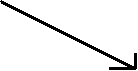
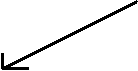
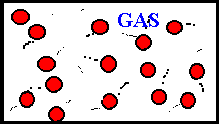
A 'triangular' summary of important state changes is illustrated above.


The possible state/phase changes and note variations of descriptor names

(a) solid ==> liquid is melting or fusing - thermal energy absorbing - endothermic

(b) liquid ==> gas/vapour (vapor) is boiling, evaporation or vapourisation (spellings! vaporisation, vaporization, vapourisation) - thermal energy absorbing - endothermic

and the reverse processes is ...

(c) gas/vapour (vapor) ==> liquid is condensation, liquefaction or liquefying (the latter often done under pressure) - thermal energy releasing - exothermic

(d) liquid ==> solid is freezing, solidifying or crystallising - thermal energy releasing - exothermic

and there is also the 'special' case of sublimation, where the liquid state is 'bypassed'.

(e) solid ==> gas is sublimation, with no intermediate liquid state (endothermic process).

The reverse process i.e.  gas ==> solid is sometimes referred to as deposition or reverse sublimation

We can use the state particle models and diagrams to explain changes of state and the energy changes involved. See sections 9 to 12 from the index


REMEMBER: These are NOT chemical changes BUT PHYSICAL CHANGES of state

e.g. the water molecules H2O are just the same in ice, liquid water, steam or water vapour.

What is different, is how the water particles are arranged, and how strongly they are held together by intermolecular bonding forces in the solid, liquid and gaseous states.


Energy changes for these physical changes of state for a range of substances are dealt with in a section of the Energetics Notes and also here in section 14.

14. Comparison of latent heat changes in physical changes of state for different substances


Learning objectives from the summary of state changes defined and illustrated above.

Be able to predict the state of a substance at different temperatures given appropriate data i.e. below its melting point a substance is a solid, between its melting point and boiling point, the substance is a liquid and above its boiling point a substance is a gas or vapour.

Be able to define and know the physical state changes for melting, boiling, evaporation, condensing, freezing, liquefaction, crystallising (crystallizing) and subliming.

Know and be able to explain that state changes are physical changes and NOT chemical changes, no new substances are formed, the chemical composition of the material is unchanged BUT total mass is conserved i.e. no loss or gain of mass..

Know that the identical particles of a pure substance particles are arranged differently and their physical state depends on how strongly the particles are held together by chemical bonding or the weaker  intermolecular bonding forces in the solid, liquid and gaseous/vapour states.


All my UK GCSE level (~US grade 8-10) school chemistry revision notes

All my UK advanced level (~US grades 11-12) pre-university chemistry revision notes

This is a BIG website, you need to take time to explore it [SEARCH BOX]

Email doc brown - comment? query?


Explaining importance of summary diagram of changes of state between gases, liquids & solids in GCSE level chemistry, What you need to know about summary diagram of changes of state between gases, liquids & solids for GCSE level chemistry, Explaining use of summary diagram of changes of state between gases, liquids & solids knowledge in GCSE level chemistry, Examples of summary diagram of changes of state between gases, liquids & solids explained when studying GCSE level chemistry, What is the significance of summary diagram of changes of state between gases, liquids & solids in GCSE level chemistry, describing explaining theory of summary diagram of changes of state between gases, liquids & solids when studying GCSE level chemistry, exam revision notes for summary diagram of changes of state between gases, liquids & solids, online help for understanding summary diagram of changes of state between gases, liquids & solids in GCSE chemistry, what do I need to learn about summary diagram of changes of state between gases, liquids & solids? what do I need to know about summary diagram of changes of state between gases, liquids & solids for GCSE chemistry exams, how to prepare for questions on summary diagram of changes of state between gases, liquids & solids in GCSE chemistry examination? summary diagram of changes of state between gases, liquids & solids for syllabus-specifications for students taking the IGCSE/GCSE level chemistry examinations, summary revision notes key points on summary diagram of changes of state between gases, liquids & solids for students studying AQA igcse/gcse chemistry notes on summary diagram of changes of state between gases, liquids & solids, Edexcel gcse chemistry notes on summary diagram of changes of state between gases, liquids & solids,  OCR 21st century GCSE chemistry notes on summary diagram of changes of state between gases, liquids & solids, OCR gateway GCSE chemistry notes on summary diagram of changes of state between gases, liquids & solids, WJEC gcse chemistry notes on summary diagram of changes of state between gases, liquids & solids, CCEA gcse chemistry notes on summary diagram of changes of state between gases, liquids & solids, CIE Cambridge igcse chemistry, notes on summary diagram of changes of state between gases, liquids & solids useful for US grade 9-10 chemistry student courses
extra advanced notes on gas laws, ideal and non-ideal gasesWebsite content © Dr Phil Brown 2000+. All copyrights reserved on Doc Brown's Chemistry revision notes, images, quizzes, worksheets etc. Copying of website material is NOT permitted. GCSE level and advanced pre-university level revision notes. Detailed notes on the states of matter and their properties. Based on the syllabus-specifications for students taking the IGCSE/GCSE level physics examinations summary revision notes and key points about summary diagram of the state changes between gases, liquids and solids, for students taking the WJEC gcse chemistry/physics, CCEA gcse chemistry/physics, CIE igcse chemistry/physics, AQA igcse/gcse physics, Edexcel gcse chemistry/physics, OCR 21st century chemistry/physics, OCR gateway chemistry/physics or any other GCSE or IGCSE level chemistry/physics exams e.g. US grade 9-10 physics courses

INDEX of all my notes on the states of matter

GCSE (~US grades 8-10) level multiple choice QUIZ on the states of matter: gases, liquids & solids

TOP OF PAGE and main indexes